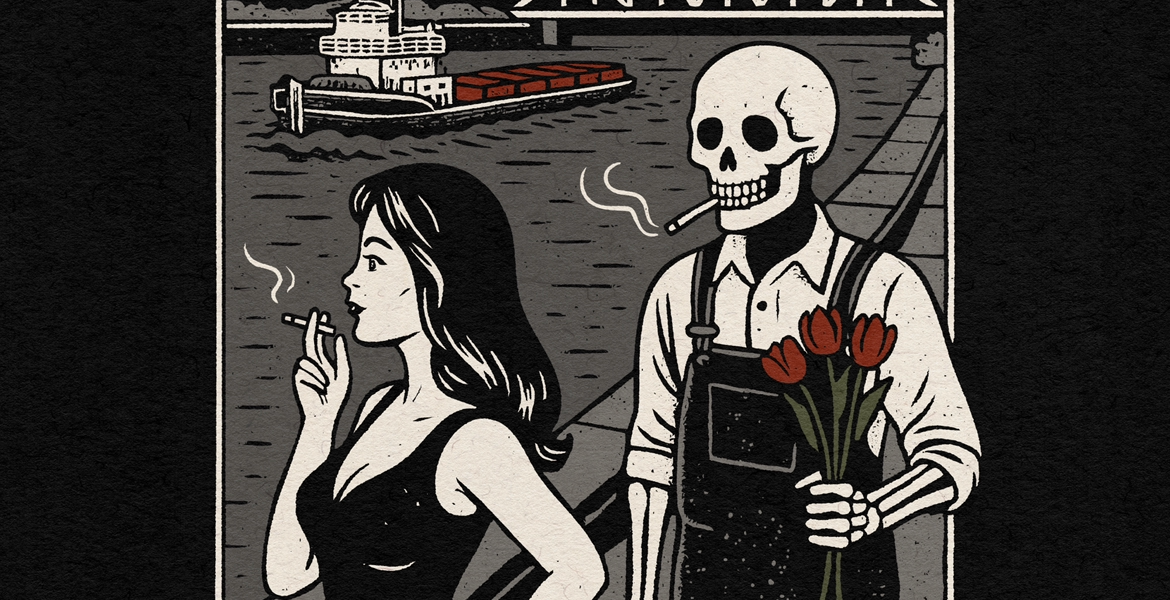
TJ Gurn’s “Die Alone” feels like it drifted in on a warm southern wind, carrying dust, regret, and a stubborn kind of grace. Released January 23rd, 2026, the Salt Lake City songwriter delivers a track that refuses to sit still inside a single genre, sliding effortlessly between blues, folk, country, and indie rock with the confidence of someone who knows the song matters more than the label.
From the first line—“Below muddy waters of Mississippi / Oh I’m dying with the blues”—Gurn plants his flag in old, familiar emotional soil. These are classic blues bones, but the song never sounds borrowed or nostalgic for nostalgia’s sake. Instead, it feels lived-in. Gurn’s voice, warm and raspy with an earthy pull, sounds like it’s been carrying these words around for a long time. There’s an intimacy here that recalls songwriter Stephen Wilson Jr., the kind of delivery that makes even simple lines feel etched in stone.
Musically, “Die Alone” is quietly immaculate. Crisp acoustic guitar tones set the foundation, while a mournful slide guitar drifts in like a ghost. Clean, unfussy drums and a steady bass keep the song grounded, never distracting from the emotional weight. A harmonica cries just enough to hurt, and there are subtle hints of the Black Crowes in the way the band lets the groove breathe without polishing away the grit. It’s perfectly executed and beautifully recorded, proof that restraint can be just as powerful as bombast.
Lyrically, Gurn leans into simplicity—and wins. The story of a man worn down by work, love eroding without fully disappearing, struggles with addiction, and emotional death arriving long before the physical kind is timeless. Lines like “Jesus turn me into wine / so she’ll love me every night” land with a quiet devastation, especially when paired with the bleak, almost catchy refrain: “I can’t die alone / When I’m already dead and gone.” It’s heavy stuff, disguised in melody you might find yourself humming without realizing why it hurts.
This is a song that would thrive in a crowded bar, the kind where conversations slowly stop as the chorus hits—or just as easily on a front porch, played to an audience of moonlight and memory. “Die Alone” doesn’t beg for attention; it earns it by telling the truth plainly and letting the listener sit with it.
With this release, TJ Gurn continues to push forward an uplifting new era of indie-folk—uplifting not because it avoids pain, but because it faces it head-on with humanity and heart. “Die Alone” is sorrowful, soulful, and deeply resonant, a reminder that the oldest stories still hit hardest when they’re told well.
INSTAGRAM