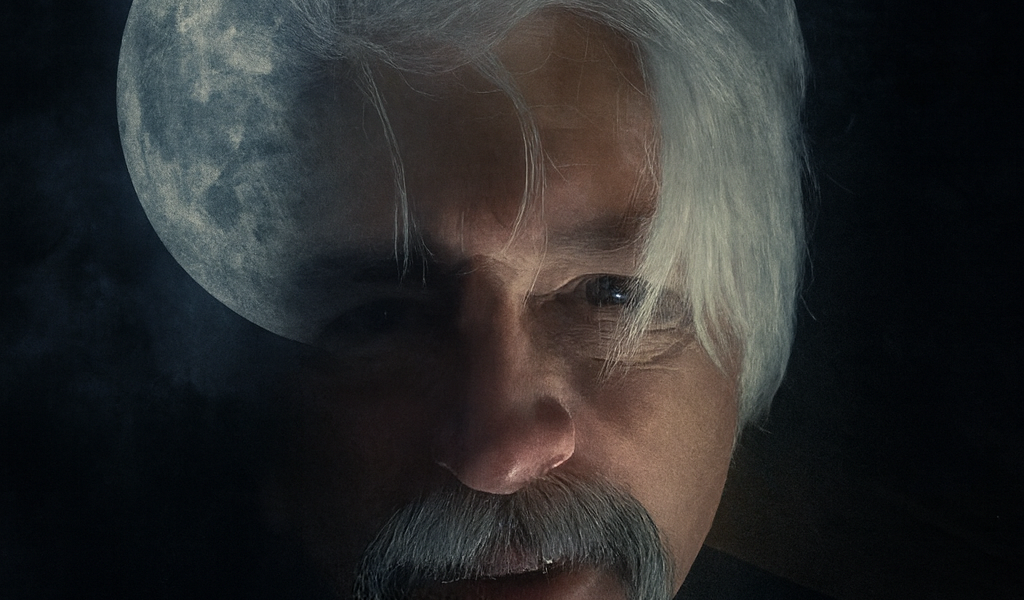
On Echoes of the Unseen, Rhode Island lifer Nick Duane turns solitude into a widescreen experience. Released December 19, 2025, the 12-track album feels like a transmission beamed from the quiet hours between midnight and dawn — all neon reflection, restless highways, and the emotional static of love half-kept and half-lost. Duane has always positioned himself just outside the mainstream, a veteran of Providence’s scene (he was a founding member of the Backslap Blues Band, the first to play Lupo’s Heartbreak Hotel) who prefers the studio to the stage. That inward focus pays off here. Echoes of the Unseen isn’t chasing trends — it’s chasing feelings, then building entire sonic architectures around them.
Fire in the Wires
Opening track “Falling Down” kicks the door in with a flash of guitar heroics that nods toward the flash-and-burn theatrics of late-Eighties virtuosos. But Duane quickly reins it in. The soloing gives way to something more vulnerable: his voice, drenched in delay and echo, front and center. “Your love filled my heart with its fire,” he sings, as industrial-tinged drums snap beneath him. The restraint is key — harmonies arrive sparingly, but when they do, they hit like a flare in the dark.
“Heart Goes Boom” leans into a pulsing synth drive that feels ripped from an imaginary 1987 blockbuster soundtrack. Duane’s vocal slides loosely across the beat, half-spoken, half-sung, as if intoxicated by its own momentum. It’s messy in a deliberate way — the sound of someone letting infatuation override precision. “My heart goes boom — like a firework sky,” he insists, and you believe him.
On “A Late Night Drive,” the album’s thesis locks into place. Headlights blur “like memories that I can’t outrun,” he sings over a propulsive beat and synth bass that throb like a dashboard glow. The track carries the DNA of Eighties pop melodrama — a little Hall & Oates’ “Maniac” — but filtered through Duane’s loner sensibility. The silence in the car weighs more than the engine hum.
Big Feelings, Bigger Atmosphere
“Everything,” currently the most-streamed track from the record, slows the pulse into a cinematic synth ballad. Lush pads swell behind a lyric that’s almost painfully direct: “Tried to give you everything / but is it enough.” It’s the emotional centerpiece of the album — earnest without being saccharine, dramatic without tipping into parody. Duane understands that simplicity, when paired with atmosphere, can feel enormous.
“Why” injects panic into the bloodstream. Piano stabs and urgent drums frame existential questions about disillusionment and social overload: “Why am I fighting so hard / when planes are falling from the sky?” A guitar solo arrives with a warped, backward echo effect that feels like time collapsing in on itself — a subtle but striking production flourish.
“You Never Take My Call” might be the record’s most relatable spiral. Built around piano and a driving electric guitar, it channels classic-rock melodrama into something contemporary and painfully human. “Funny how you never take my call / but I still call,” he repeats, the line morphing from stubborn hope into self-aware heartbreak.
Psychedelia, Power Lines, and Paper Moons
Mid-album highlights like “On My Mind” and “Little Bit Sad” loosen the mood. The former swirls with Sixties-psych organ and unexpected horn punctuation, while the latter settles into a late-night, drink-in-hand groove — rueful, self-aware, quietly wounded.
“A Fall Day” stands apart in acoustic clarity. With vivid imagery of strangers meeting under drifting leaves, Duane taps into something timeless. “Standing on the edge of a maybe, a dream,” he sings, capturing that fragile space between possibility and regret. It’s one of his most emotive performances on the record.
Then there’s “Queen of Hearts,” a rabbit-hole fever dream that plays like Lewis Carroll filtered through Nineties trip-hop textures. Chorus-drenched guitars shimmer over programmed drums that feel plucked from an alt-radio time capsule. The lyric’s surreal trial imagery — “Off with their heads” — underscores the album’s recurring theme: love as both salvation and sentence.
The closing stretch is where Duane fully embraces the cosmic. “Static Saints” dances under power lines and broken halos, its synth-and-steel aesthetic framing lines like “We light the dark with borrowed flames.” It’s playful on the surface, but existential underneath.
And then comes “Glass Satellite,” a slow-burning finale that drifts into Roger Waters–esque territory. A haunted synth bass opens the track, leaving Duane’s voice exposed in the void. “I’m a glass satellite, spinning out of tune,” he sings — and the metaphor sticks. The song builds patiently, shimmery and strange, before dissolving into static and shadow. It’s less a conclusion than a vanishing act.
The Sound of Staying
What makes Echoes of the Unseen compelling isn’t just its retro-futurist palette — it’s the persistence behind it. Duane has had a long, sometimes complicated relationship with music, stepping away and returning on his own terms. That independence bleeds into every track. This is a record built without chasing approval, assembled by someone who writes because he has to. Echoes of the Unseen feels defiantly personal. It’s music for empty highways, for glowing phone screens at 2 a.m., for anyone who’s ever replayed a voicemail just to hear a familiar voice.
Nick Duane may call himself a loner, but on this album, he turns isolation into communion. These songs don’t shout to be heard. They hum — like distant signals in the dark — and if you tune in, they stay with you.
https://nickduanemusic.com/
https://linktr.ee/nickduanemusic