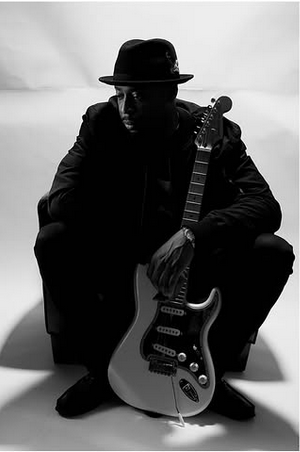
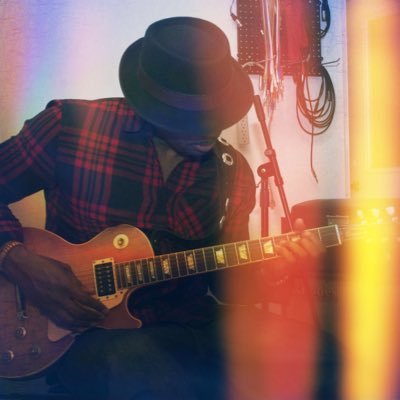
Hi O.C. Hazel and welcome to College Radio Charts! How has your 2026 been so far?
2026 has been great. It’s been a lot of change in a good way. I’ve been focused on getting the music out there, preparing for upcoming shows, and working on my follow up release. It feels like things are starting to line up.
Congrats on your recent release, Fire on the Mountain. Can you tell us about the EP and how it came together?
Fire on the Mountain was me learning how to make a project feel cohesive while still showing different sides of my sound. I wanted it to capture range without feeling scattered, and to sound distinct from what’s out right now. It was really about finding my identity across a full body of work.
Do you come from a musical family? What is one of your first musical memories as a child?
I don’t come from a musical family, so a lot of this was self-driven. One of my earliest memories is playing a toy guitar in a home video when I was around four. I did piano recitals at eight, and later in middle school I had band sleepovers where we would practice in my basement late into the night, then wake up early and do it again. That’s when it started to feel real to me.
Fire on the Mountain feels like a declaration of identity as much as a musical statement. How conscious were you of telling your own story—culturally, spiritually, and personally—through this EP?
I was very conscious of telling a story, but not necessarily my own. I wanted it to feel like a
journey anyone could step into. Each song represents a different part of life:
● “The Traveler” is about exploration and stepping into the unknown
● “Rolling in the Groove” is about enjoying life and being present in the moment
● “Luck of the Draw” is about struggle and uncertainty
● “Magnetic” is about finding love and connection
● “Fire on the Mountain” is about accepting what you can’t control and still choosing to move forward
Together, it’s meant to feel like a full life cycle rather than one person’s story.
“The Traveler” opens with a riff that feels like a respectful nod to Jimi Hendrix or perhaps Stevie Ray Vaughan. Were you intentionally channeling that lineage, or did the song just demand that kind of energy from your guitar?
Those are some of my favorite guitarists and definitely people I look up to. I wasn’t trying to channel them directly. That style and tone just feel natural to me. It’s what I’m drawn to, even though I like exploring other sounds too.
Your guitar work feels expressive in a way that almost replaces a second vocalist. Do you think of your guitar as a narrative voice when you’re writing?
I do, but it’s not something I overthink when I’m creating. When I’m playing live, I use the guitar more intentionally to bring out emotion and highlight certain moments. When I’m writing, it usually starts with a melody I hear in my head that I’m trying to bring out as honestly as I can, and then everything builds around that.
Which comes first for you, the lyrics or the melody?
It really depends on the song. I try not to force either one.
Is that wanderer metaphor in “The Traveler” drawn from your own journey in Lansing and Detroit, or is it more spiritual than geographical?
It’s not really drawn from my own life directly. I’ve lived in Michigan my whole life. I just connect with stories about journeys. Westerns, space adventures, odysseys, even stories like the prodigal son. That idea of searching and growing is something I’m naturally drawn to.
What would you say is O.C. Hazel’s guiding light that you follow?
Creating. It’s a core part of who I am. It’s not something I think about too much, it’s just something I feel driven to do.
“Magnetic” shifts the mood into something funkier and more sensual, with wah-wah textures that feel Prince-like. Who would you say are your biggest musical influences?
In a lot of ways, I’ve been my own biggest influence. Early on I avoided learning other people’s songs because I didn’t want to shape my playing around anything external. I wanted it to come out naturally. Even now, if I learn something, I tend to play it my own way based on what I hear instead of studying it closely.
As a first-generation Nigerian American with Igbo heritage, do African rhythmic traditions show up in your music?
Yes, especially in “Rolling in the Groove.” The faster drumming and the more staccato guitar and bass parts are probably the closest on this project. I’d like to explore African melodies even more in future releases.
You’ve built a reputation as a go-to session guitarist in Detroit. How did working behind other artists shape the confidence it takes to step forward with your own voice?
It helped me understand the full recording process better. Things like timing, structure, mixing, and how songs come together. Being involved on that side gave me more confidence in how I approach my own music.
There’s a recurring theme of falling down and getting back up in “The Traveler.” Was that resilience born from a specific experience in your life or career?
I think it lines up a lot with learning guitar. It’s a process where you go through highs, lows, and plateaus. You fall off and come back better. That kind of repetition builds resilience over time.
Detroit has such a deep musical history—from Motown soul to gritty garage rock. In what ways does the city’s musical DNA impact your sound?
I’ve always loved Motown. There’s a level of feel and intention in that music that stands out. I also used to go to blues jams around the city and watch local players perform at a really high level. Experiences like that definitely stay with you.
Thank you for spending some time with us today. Where can people go to find out more about you and your music?
http://ochazel.com
https://ochazel.lsnto.me/fireonthemountain